The best time for Abisko dog sledding
Snow decides when the sleds run, more than the calendar does. We opened the booking calendars for December and January and read the reviews, which run from January to March. Below you will find the dark weeks, the coldest stretch, the returning light and the months we would choose.
When the sled tours run
The booking calendars we opened showed departures from mid-December, with dates on December 17 and in January. Reviews of the dog sledding excursion with fika date from January to March.
No calendar can promise snow, and the dogs need a firm base on the trails. One reviewer arrived in late November and had to settle for a walk, because the snow was too thin for sleds, so the earliest weeks of winter carry the most risk.
From May to November there is no sledding on these tours. Abisko turns into a hiking base then, with light around the clock in June and much of July.
Around Christmas, the polar night
From about mid-December to early January the sun never rises over Abisko. This is the polar night, and at midday the sky turns a deep blue instead of black.
A sled tour in those weeks runs mostly in twilight. Pickup is at 9:45 am, and the ride near Kiruna falls roughly around the middle of the day, so you see forest and frozen lakes in soft blue light.
Some travelers love that color, while photographers struggle with it. December averages a high of -3 °C (27 °F) and a low of -10 °C (14 °F), milder than what follows.
January, the coldest stretch
January is the coldest month here, with average highs near -6 °C (21 °F) and lows near -15 °C (5 °F). The sun returns above the horizon, but daylight lasts only about three hours.
The calendars we checked had sled departures in January, and the snow is usually settled by then. Sitting still on a moving sled at those temperatures needs proper layers, as our guide to nine warm layers explains.
Short days also shape the drive. With about 4 hours of the 7 spent on the bus, much of the road along Lake Torneträsk passes in dim light.
February and March, our choice
In our opinion, February and March are the strongest months for a sled day. Daylight grows from about 8 hours in February to about 12 in March, and the snow is usually deep after the winter.
February still averages highs of -6 °C (21 °F), while March climbs to about -2 °C (28 °F). Those few degrees are easier on hands and faces during a ride where a musher, the person who drives the dog team, does all the work.
More light means more of the drive turns into scenery. The view across the lake to Lapporten, the mountain gate, reads best in sun, and the camp photos come out sharper.
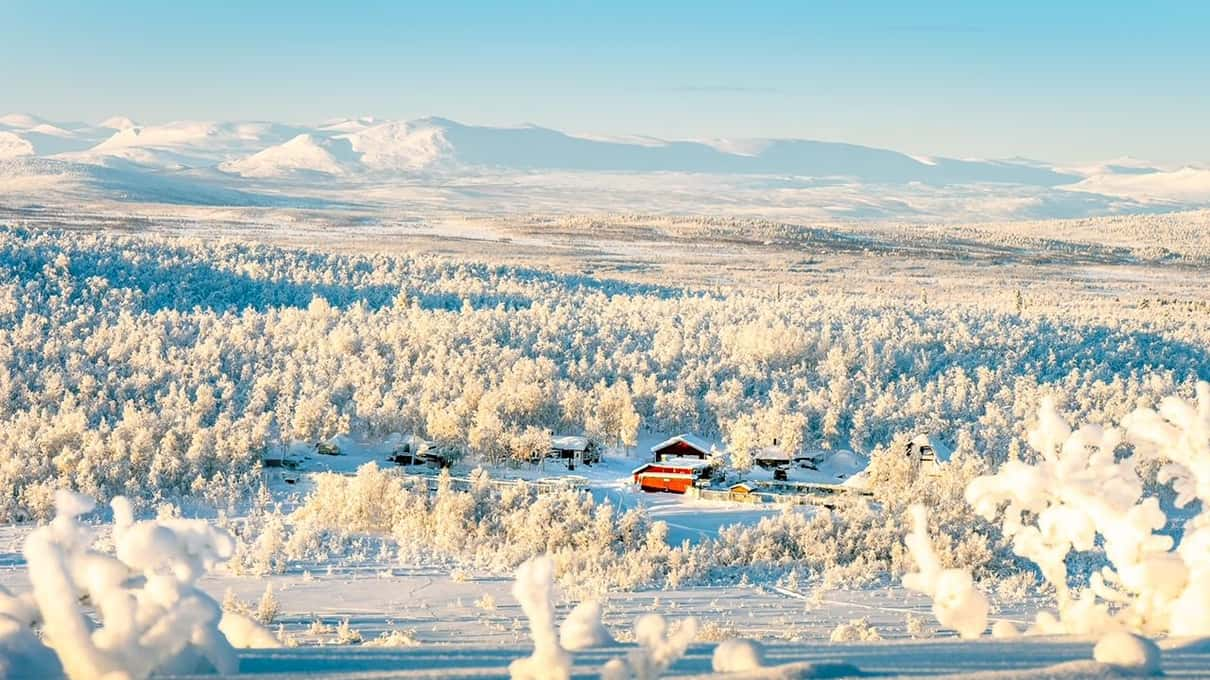
Our pick for a late-winter sled day
Lights Over Lapland, a 7-hour day that starts with the 9:45 am collection from your Abisko or Björkliden hotel, rated 4.7 from 77 reviews. Bookable for one adult; pack your own lunch.
Late winter also brings longer evenings in the village after the ride. You are back in Abisko in the late afternoon, with time to rest and eat before a night out under the sky.
The price does not change with the light. Our pick costs ~$244 per adult on every date we checked, and the tour with lunch costs ~$312 with a minimum of two people.
April and the end of the snow
We only opened December and January dates, so we can't say how late into spring these two tours keep running. Snow often lies into April this far north, though warm spells soften the trails.
Soft snow slows the dogs and can shorten a route on the day. Weather decides on these tours from December onward too, yet a thaw late in the season is harder to wait out.
April brings about 16 hours of daylight and highs around 3 °C (38 °F). If you plan that late, look at the calendar for your exact dates and lean on the free cancellation, up to 24 hours before the start.
When snow runs short
Weather decides on the day, and the listing of the tour with lunch says so plainly. Both sled tours can be cancelled free up to 24 hours before the start, which helps when the snow report looks thin.
One guest of the AbiskoHikes evening walk chose it because there was too little snow to sled. Our page on the husky hike with retired dogs covers that fallback, which needs no trail for a sled.
Staying in Kiruna rather than Abisko changes the plan too. Read why the sleds wait near Kiruna before you book a pickup in a village you are not sleeping in.
Pairing the season with the aurora
The dark months that bring the sled tours also bring long nights for the northern lights. Abisko is known for a "blue hole" of clearer sky that the mountains often hold over the village, though cloud still wins some nights.
A day on the sled and an evening under the sky fit the same trip, as our page on huskies and the aurora on one evening shows. February and March give you both light by day and dark by night.
Once you have picked your weeks, compare Abisko dog sledding tours side by side. The day and the seasons on our home page sum up the climate, and our pick among the dog sled tours from Abisko explains why the excursion with fika leads.